
Wind power systems.
Working together.
Explore off-grid wind energy, wind-solar hybrid systems with battery storage, and grid-connected wind power. Anuj Solaris LLP helps you start with a clear system concept before site-specific engineering.
Power for the places
that need independence.
For remote sites and essential backup loads, wind generation can be connected through a controller to battery storage and an inverter supplying AC loads.
Designed around your essential loads.
Battery capacity and inverter sizing should reflect daily demand, surge loads and the number of backup hours required.
- Remote offices and work sites
- Lighting, fans and communication loads
- Essential service backup evaluation
View reference system concept
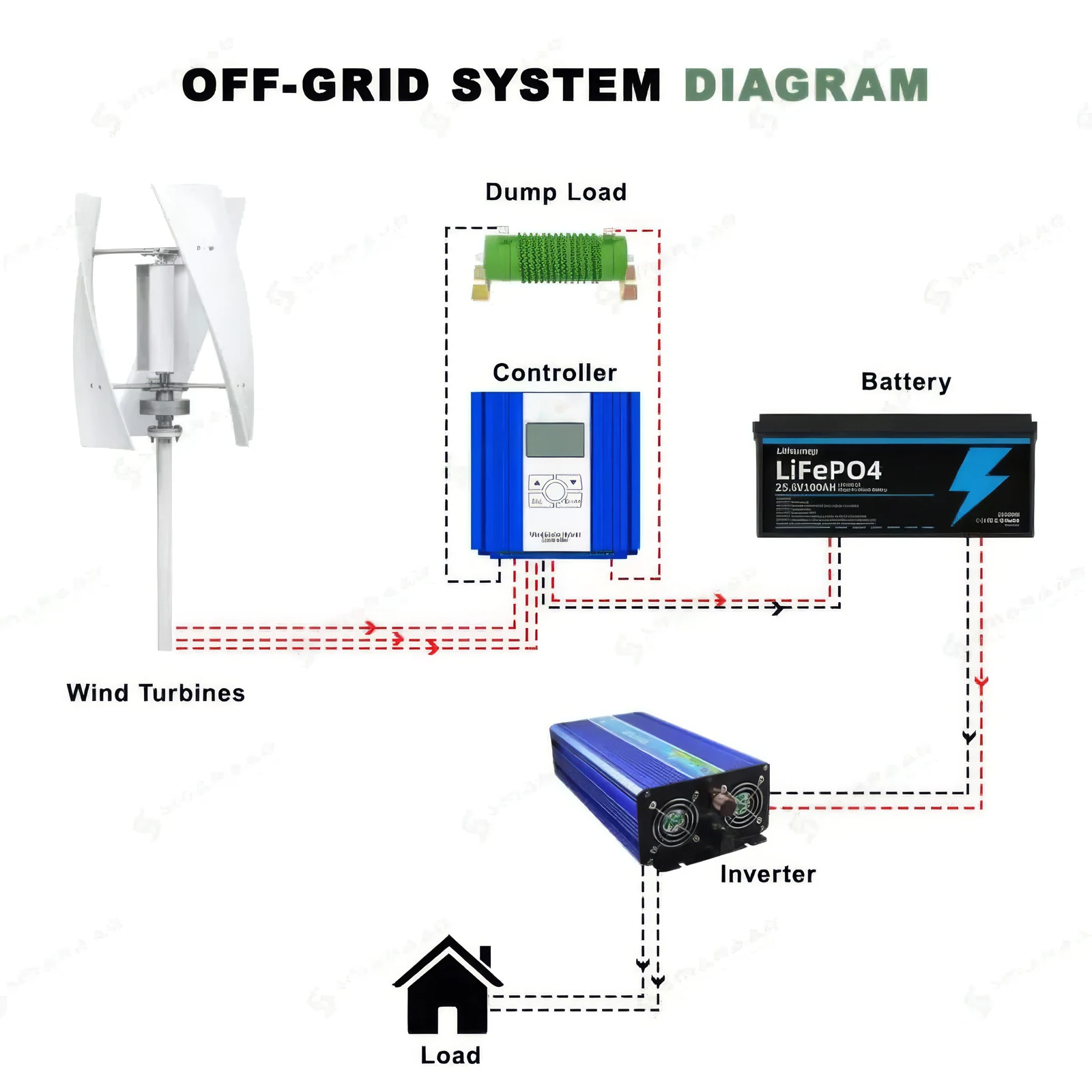
Reference concept from the company presentation. Final component ratings, wiring and protection require project-specific engineering.
More possibilities.
One connected system.
Wind generation can be paired with solar energy and battery storage. The supplied system concepts include multiple turbines feeding a common DC bus, with a shared battery bank and inverter.
A complementary energy approach.
The right mix depends on the wind and solar resources at your site, your load profile and the level of continuity you need.
- Wind and solar integration assessment
- Common battery and inverter architecture
- Controller and protection coordination
View reference system concept
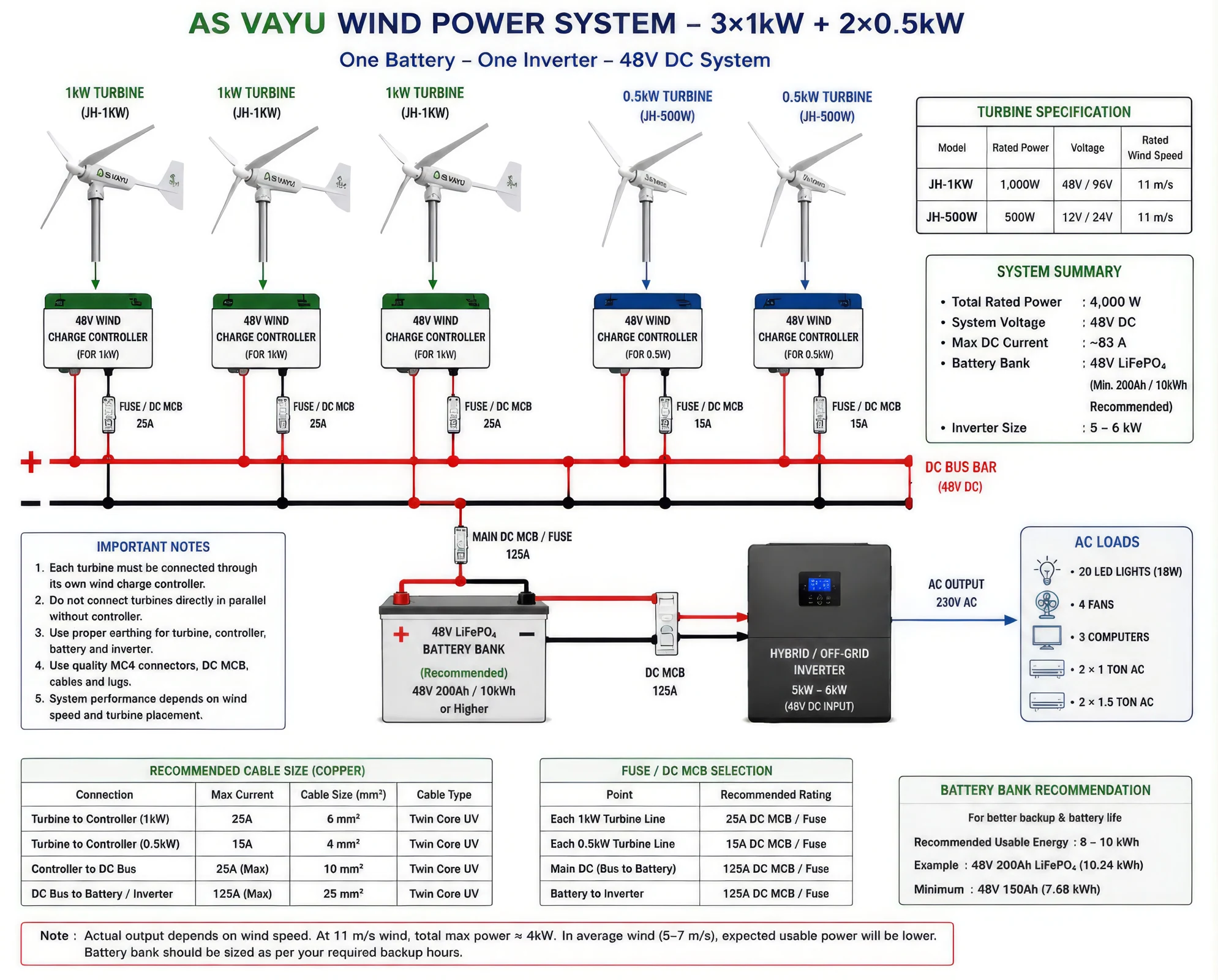
Reference concept from the company presentation. Final component ratings, wiring and protection require project-specific engineering.
Local generation.
A wider connection.
Grid-connected systems route wind power through grid-tie inverters and AC distribution to the site load and grid. Connection and any export arrangement depend on local utility requirements and approvals.
Plan the connection from the start.
Grid compatibility, metering, protection and applicable approval requirements need to be reviewed as part of the project design.
- Industrial and institutional site evaluation
- Electrical protection and grid compatibility
- Site-specific metering and utility review
View reference system concept
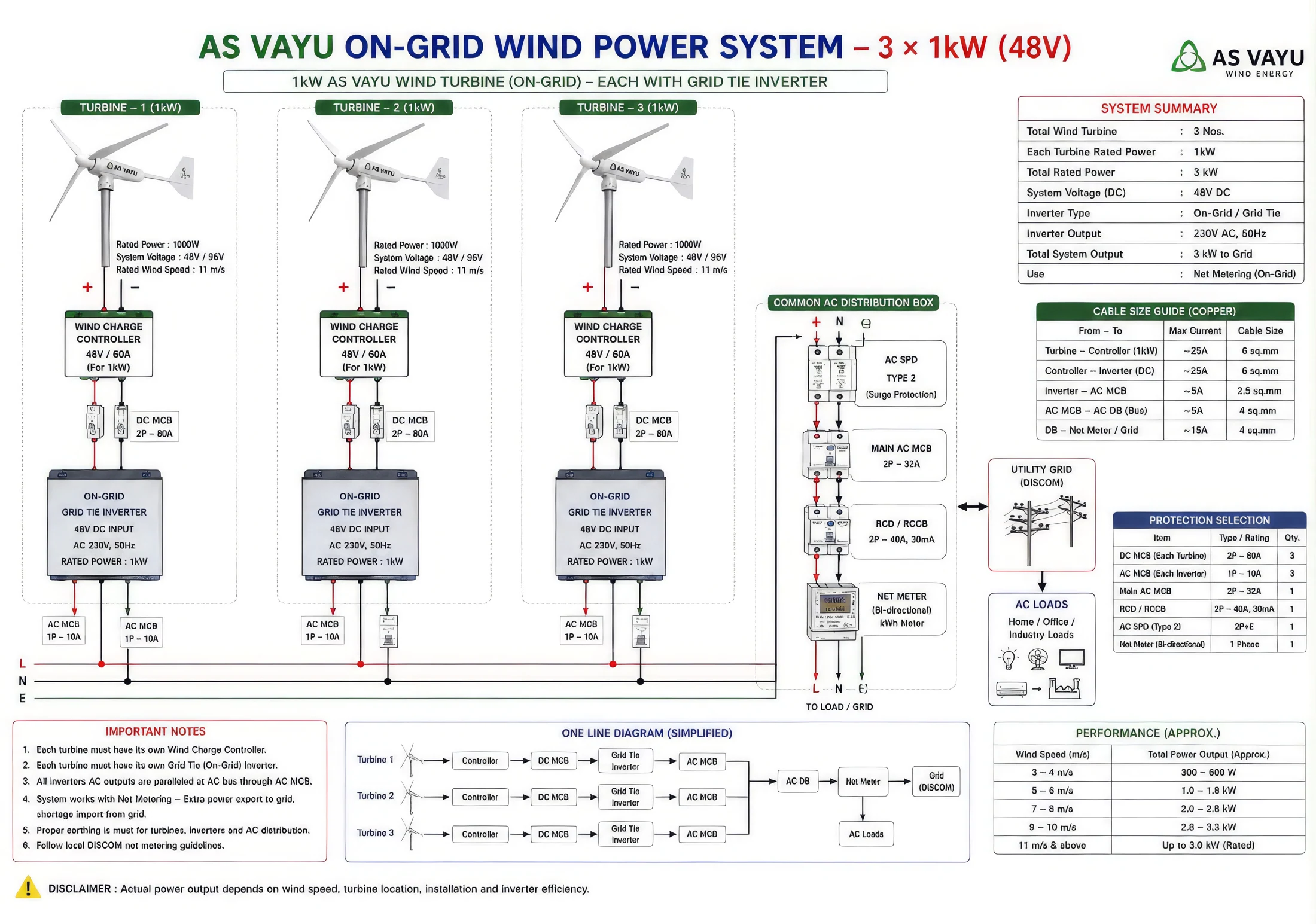
Reference concept from the company presentation. Final component ratings, wiring and protection require project-specific engineering.
Different places.
Meaningful possibilities.
Potential applications from the AS VAYU presentation. Each project begins with a suitability assessment.
Remote offices & rural facilities
Evaluate decentralized power for panchayat facilities, rural worksites, lighting, fans, computers and communication equipment.
Schools, hostels & health posts
Explore backup options for essential services where unreliable electricity can disrupt day-to-day operations.
Lighting & public infrastructure
Assess small distributed wind systems where grid extension is difficult or the load requirement is limited.
Industrial & institutional campuses
Consider larger H-Type models and hybrid wind-solar-battery architectures for campus support loads.
Start with your power requirement.
The presentation’s selection guide groups 50W–500W for small loads, 500W–5kW for institutional backup, and 10kW–100kW H-Type models for larger campus needs. Site-specific design determines suitability.
A clearer view of
hybrid energy.
Understand why a hybrid wind-solar-battery system needs coordinated controllers, storage and inverters—and which existing equipment details to share before discussing integration.